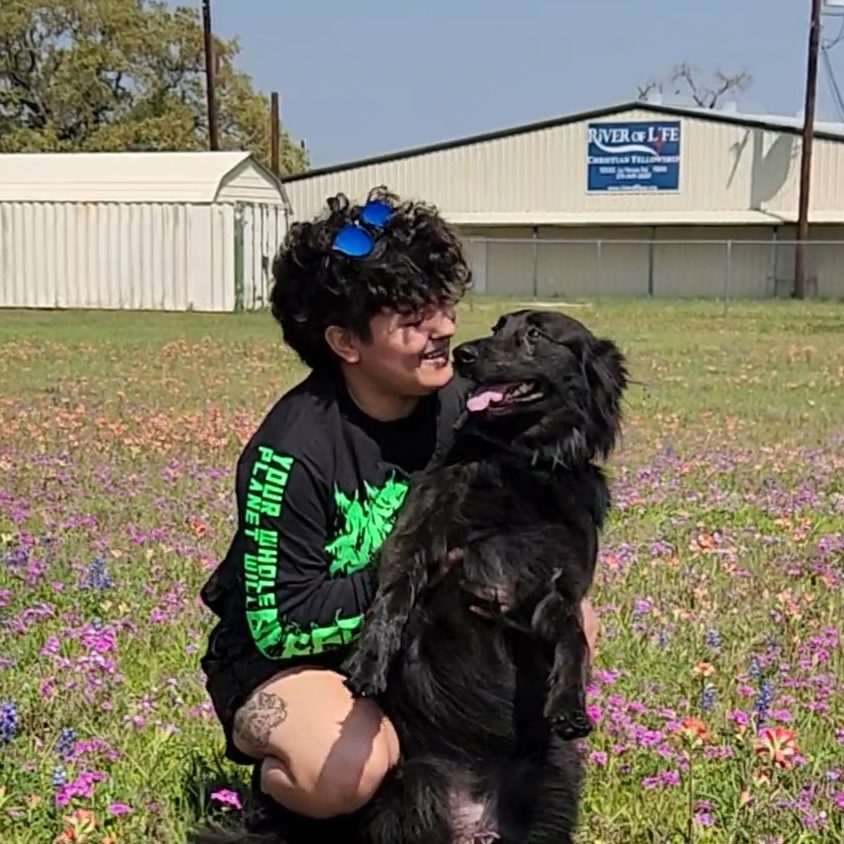
At PractiCanines, our mission is to empower individuals with disabilities through exceptional service dog training, partnerships, and service dog education. We are committed to:
Deeply understanding and meeting the specific training needs of each service dog according to their role.
Exploring and applying advanced canine behavioral science to enhance how dogs think, learn, and interact.
Employing the most effective training methodologies available to create strong handler-dog teams. Ensuring the ongoing health and happiness of our dogs, integral to their effectiveness and wellbeing.
Continuously evaluating and improving our program to achieve the highest standards of success.
Supporting our trainers in their professional growth, enhancing their ability to connect and educate effectively.
Additionally, our community outreach includes:
Educating the community on the capabilities of service dogs and the challenges their handlers face.
Adhering to the highest legal and ethical standards in all our practices.
Ensuring our programs are accessible and inclusive, welcoming a diverse range of clients.
Providing support to our service dog teams postplacement, ensuring lasting functionality and companionship.
Cultivating robust partnerships with other organizations, experts, and the community to enrich our resources and knowledge.
Engaging in dynamic fundraising and grant writing efforts to sustain and expand our impact.
Actively promoting our services to broaden our reach and assist more individuals in need.
Leveraging cutting-edge technology to refine our training and support mechanisms.
Our ultimate goal at PractiCanines is to enhance the freedom and quality of life of people with disabilities through exceptional service dog training, partnerships, and service dog education.
Some Pocket Knowledge
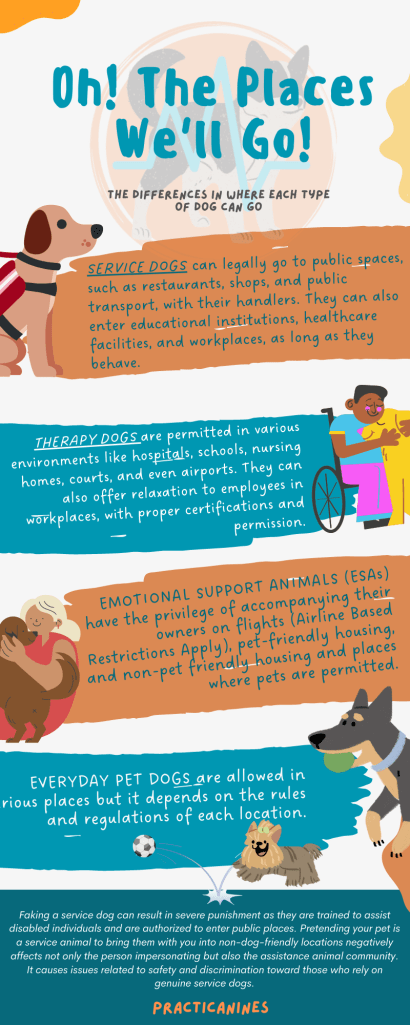
- A SERVICE DOG is trained to perform specific tasks for individuals with disabilities.
- A THERAPY DOG is trained to provide comfort and affection to people in hospitals, nursing homes, and schools.
- An EMOTIONAL SUPPORT ANIMAL provides comfort and support to individuals with emotional or psychiatric disabilities but does not have specific training.
 PRACTICANINES