
A Comprehensive Guide

Dog training styles and politics are more similar than expected, as both involve debates about morals and ethics surrounding the tools and methods used. Dog training discussions often center around what is considered acceptable when training a dog.
There are different schools of thought advocating for their choice of training method. As such, there is an ongoing debate about what constitutes as appropriate dog training, dog training tools, training techniques, and with opinions divided on using training tools such as prong collars, e-collars, and head halters. This makes the dog training community complex, diverse, and overall unregulated. This has led to the confusion of many dog owners and enthusiasts about who and what is the right choice for their dog.
After collecting personal observations and experiences with dog training since 2018, I have found that training styles fall on a spectrum rather than strict categorical areas. There are three sections of the spectrum: positive reinforcement using rewards, Alpha dog training employing punishments, and a moderate approach called Balanced training combining both techniques. Positive reinforcement methods aim to promote good behavior by reinforcing them with rewards, such as treats and praise. In contrast, Alpha dog training focuses on correcting bad behavior with punishments such as but not limited to yelling or physical contact. The moderate approach in balanced training combines both methods to obtain the desired behavior by offering treats for good actions and correcting taught behaviors at appropriate times.
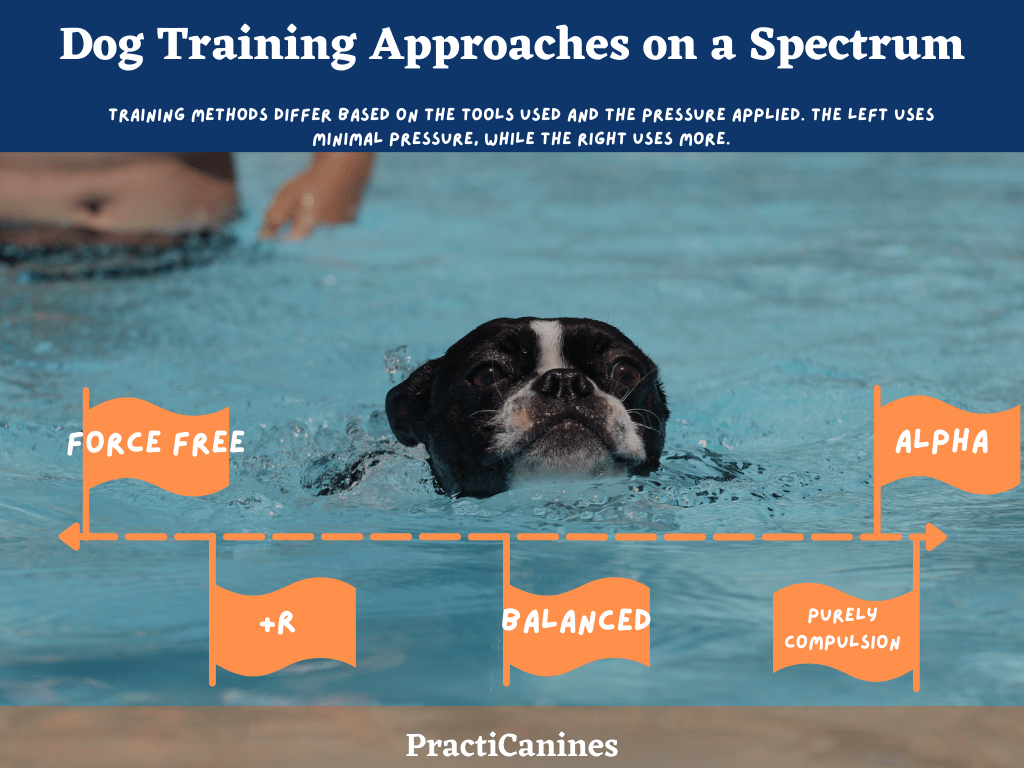
Positive Reinforcement Training / Force-Free Dog Training
Force-free dog trainers utilize positive reinforcement methods, such as treats, toys, praise, and clickers. They do not resort to punishing undesired behavior but rather redirect attention to positive behaviors. These trainers focus on effectively communicating with dogs and rewarding desired actions instead of resorting to physical punishment or harmful tools. It may be a good fit for people who may not be comfortable exploring training tools. Positive Reinforce trainers differ in that they may take a sort of LIMA (Least Intrusive, Minimally Aversive) approach.
The downsides of force-free training include a lack of immediate control or correction of behavior, potentially slower results, reliance on treats or positive reinforcement, and the potential for the dog to not respond in emergency situations where immediate action is necessary, which may be especially dangerous for the elderly, disabled, and children who handle dogs unsupervised. Additionally, some dogs may not find the rewards used in force-free training motivating, and this method may not be effective in addressing certain behaviors because of this. Finding highly skilled positive reinforcement trainers with excellent timing can be a challenge, potentially requiring dog owners to exercise patience in their search.
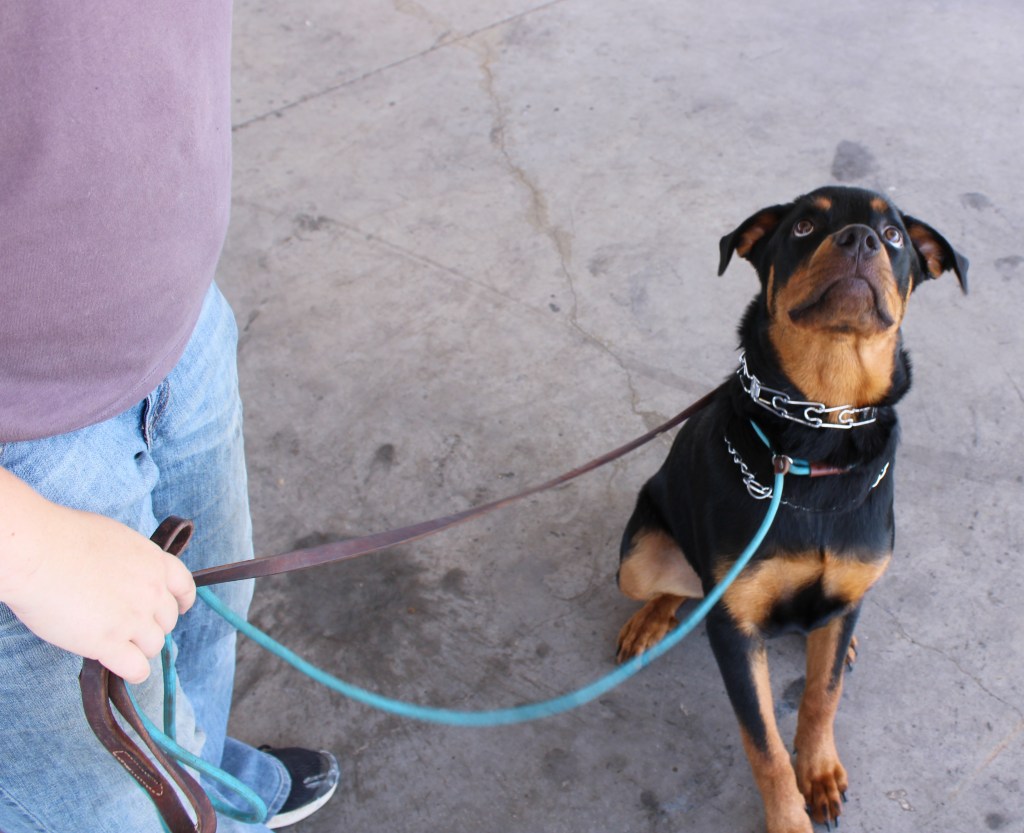
Compulsion Training / Alpha Dog Training
Alpha dog training is a method of dog training that focuses on establishing the owner or trainer as the alpha. Alpha dog training, which involves asserting dominance over a dog through punishment and physical force, can have negative effects on a dog’s behavior and well-being. This type of training can cause fear, anxiety, and aggression in dogs, leading to behavior problems and a breakdown in the human-dog relationship. It can also increase stress levels and cortisol production in dogs, leading to long-term health problems. While Alpha Dog Training/Compulsion Training may boast impressive results regarding immediate obedience, it’s important to consider the potential consequences. Alpha Dog Training has a major disadvantage as the originator (David Mech) of Alpha/Dominance theory declared it debunked and factually incorrect. This means that relying on this type of training can lead to misguided ideas about the relationship between dogs and their owners, potentially harming the well-being of the dog.
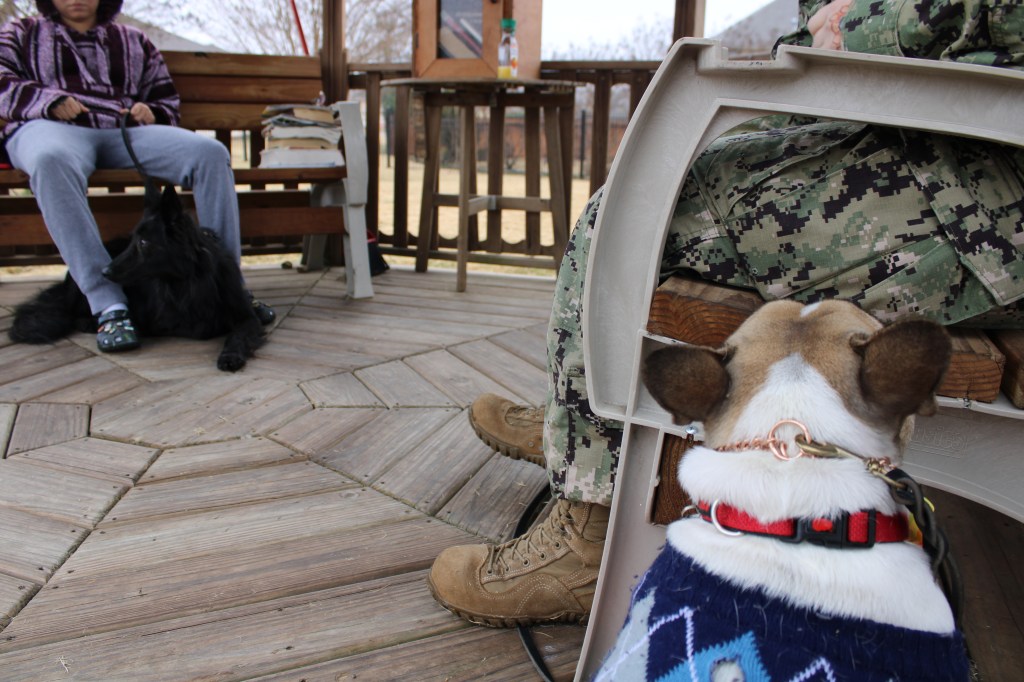
Balanced Dog Training / Science-Based Dog Training
Balanced dog training is a training technique that incorporates positive reinforcement and negative reinforcement and classical conditioning. It aims to train dogs to behave well by setting clear boundaries and expectations while also rewarding positive behavior with treats and praise or whatever the dog may deem as a reward. This method creates a well-rounded dog that is obedient, calm, and responsive to its owner’s commands.
Unlike force-free or punishment-based training, balanced dog training takes a holistic approach that takes into account the dog’s individual needs and personality. Corrections are used to discourage unwanted behaviors, such as jumping or pulling on a leash. The most common approach is not correcting a dog until the desired behaviors have been taught.
The science-based dog training title comes from the combination of operant conditioning and classical conditioning, in other words learning theory. Operant conditioning focuses on changing behavior by manipulating consequences, rewards, and punishments. Classical conditioning pairs a naturally occurring stimulus with a previously neutral stimulus to create a learned response. In science-based dog training, these principles are applied to the training process, utilizing positive reinforcement techniques to reinforce desired behaviors and eliminate unwanted ones with whatever quadrant of operant conditioning may be necessary.
While balanced dog training can be practical, its drawback is that it is often difficult for dog owners to identify true professionals as the dog training industry is unregulated. Consequently, fraudulent individuals can offer services under the labels “balanced” or “science-based” dog trainers. This especially highlights the importance of research and screening before selecting a dog trainer and ensuring that they have the knowledge and experience to handle a dog’s training.

Which is the right choice?
When it comes to training styles, there are endless philosophies to consider, making it easy to get lost in the debate of what’s right and wrong. While each approach may be suitable for different individuals, not all will be effective for everyone. It’s important to consider your own goals, abilities, and preferences when choosing a training style to ensure you’re able to consistently make progress and achieve results.
Personally, I would exclude Alpha Dog Training/Compulsion Training. Also, consider your preferences and schedule before booking dog training lessons, this will help you and your dog trainer out when signing up. Be realistic in what results to expect based on your level of understanding dog behavior and involvement in the training process.
Not Realistic: I want my dog who is human aggressive to be friendly to everyone.
Realistic: I want to teach my dog skills to be able to be around people safely while I advocate for them.
Without committing to frequent and repetitive training sessions, your dog will struggle to learn and maintain the behavior. Remember that dogs thrive on routine and repetition, so if you don’t invest time in training, you’re unlikely to see the results you desire. Consistency is key; it’s not fair to expect your dog to act perfectly if you aren’t willing to make the effort to teach them in ways they can understand.
Types of Dog Training Classes
Private Lessons
During private dog training lessons, the trainer and dog owner work one-on-one with the dog to address specific behavior issues or skills. The trainer typically begins by assessing the dog’s behavior and listening to the owner’s concerns. They then create a personalized training plan that suits the dog’s temperament and training needs.
Online Training Lessons
Online training lessons are usually conducted through a virtual platform that allows instructors to deliver their lessons online. Participants can access the platform through their devices and attend the lessons through a live or recorded video. Online training often includes presentations, quizzes, and interactive sessions that encourage participation and engagement among participants.
Group Classes
Group dog training lessons typically involve a trainer working with multiple dogs and their owners at once. The lessons may take place outdoors or indoors in a structured environment. During the sessions, the trainer will demonstrate specific commands and techniques, which the owners can then practice with their own dogs.
Day Training
Day training is a training program where the dog trainer picks up the dog and trains them for the day. The program is designed to help busy dog owners who may not have the time to train their dogs
Board & Train
Board and train programs involve the dog staying with a professional trainer for a set period, typically ranging from two weeks to several months. During this time, the trainer will work with the dog on obedience, behavior modification, and socialization. The training is intensive and tailored to the individual needs of the dog. The dog will typically be housed in a kennel or facility during the program and will receive multiple training sessions per day. Owners will generally have some involvement in the program, receiving updates from the trainer and participating in “transfer sessions” where they learn how to maintain the training once the dog returns home.
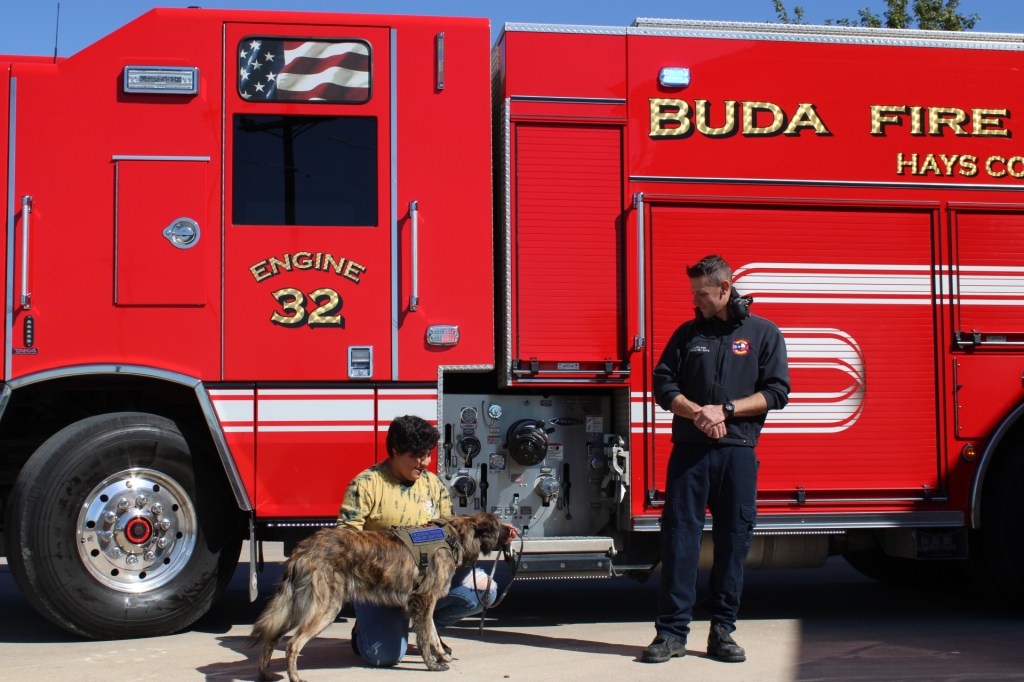
There are many types of training options available but I hope this helps you understand dog training more and find the right trainer for you and your dog!
Put your dog first, choose an honest and skilled trainer.


 PRACTICANINES