
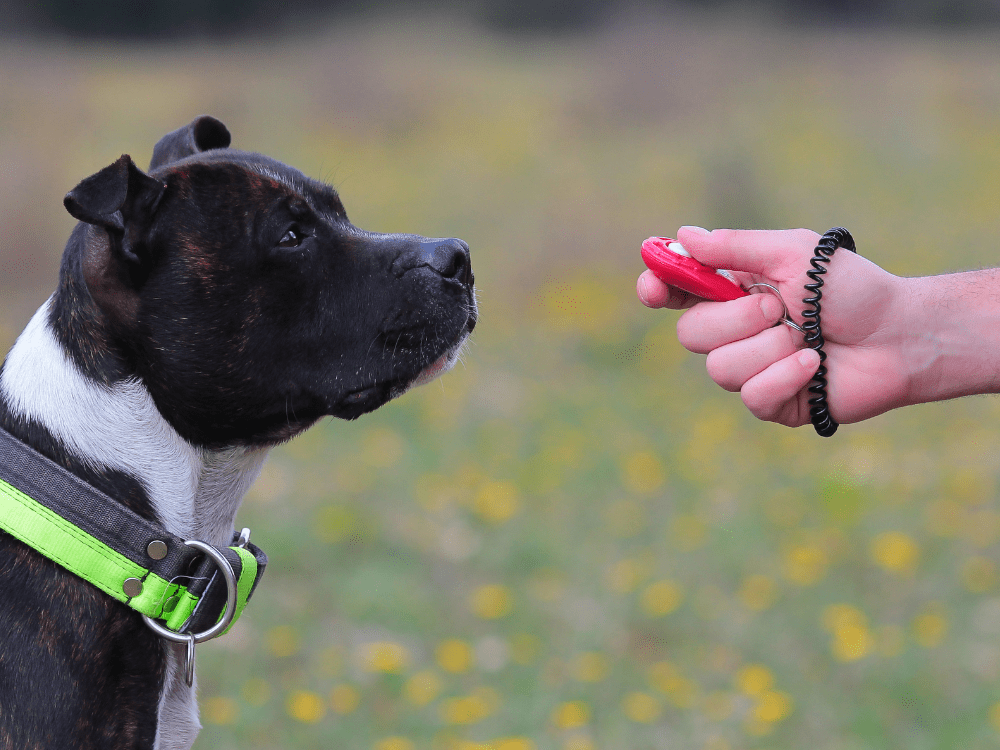
A Brief Introduction to Clicker Training History
B.F. Skinner discovered the principles of modern animal training in the 1940s and 50s and was the first to use a clicker as a marker with a dog in 1952. The real spread of this training method occurred in marine mammal exhibits in the US in the 1960s. Clicker training has since been adapted for use in training a wide variety of animals, including dogs, cats, horses, and even humans.
Clicker training has been proven to be a highly effective tool for animal training, but it is still not widely used among pet owners. One reason for this could be a lack of awareness about the technique and its benefits. Additionally, some may view the clicker as an unnecessary expense or may not have the patience for consistent training initially. Some pet owners may also prefer traditional training methods they are familiar with. Lack of access to experienced trainers or inadequate training resources may also contribute to the slow adoption of clicker training in many parts of the world. Hopefully, it’ll gain popularity.
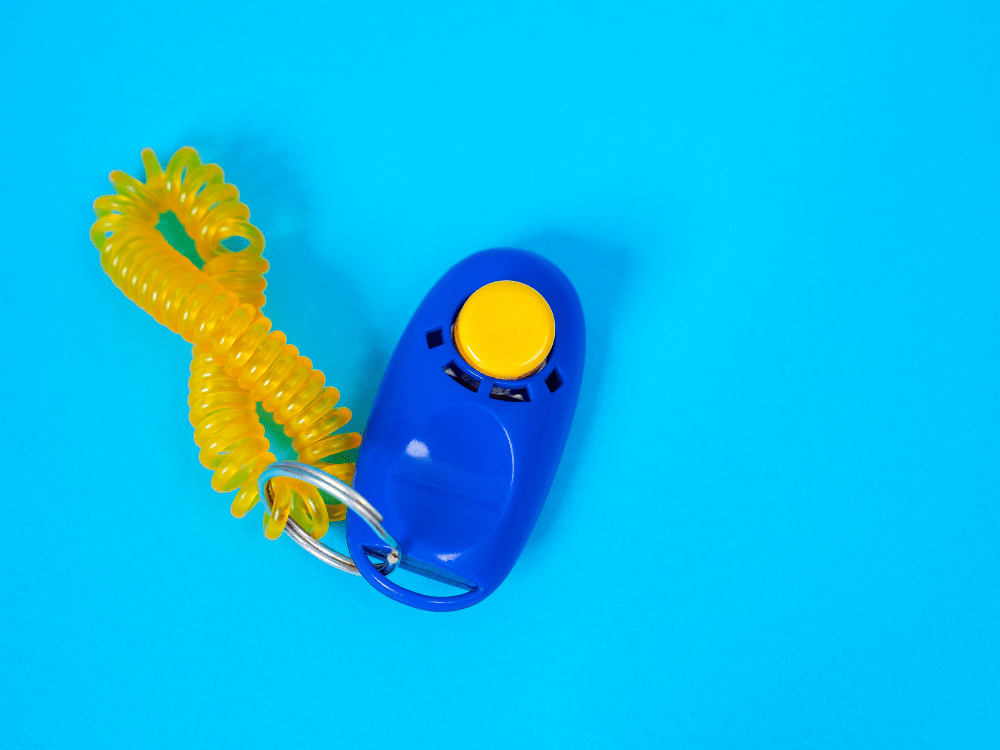
By using a clicker to make a distinct sound when a desired behavior occurs, trainers can communicate quickly and clearly with their trainee, their dog. Its versatility stems from its ability to be used in various settings, including pet training, sport, service animal training, and even medical and therapeutic applications. Clicker training has been shown to improve communication between animal and trainer, increase focus and attention, and build confidence in the trainee when appropriately used
Suppose You’re Ready to Start Clicker Training
The planning phase is crucial when it comes to dog training. It is essential to have a clear understanding of your objectives to ensure you are heading in the right direction. Taking small steps in the beginning will help you achieve your ultimate goal. It is essential to take your time and have patience throughout the process of training your dog.
A more positive and practical approach to training your dog is to focus on the desired behavior instead of simply trying to stop unwanted behavior. Instead of thinking, “I don’t want my dog to jump on people,” focus on “I want my dog to sit when they say ‘Hi’ to people.” By setting clear goals and reinforcing an alternative behavior, your dog will be more likely to learn quickly and develop good habits. This positive reinforcement approach is much more effective than simply punishing your dog for bad behavior, especially if you have not been taught by a dog training professional about when and where correction is beneficial.
Let’s make a plan to use the clicker!
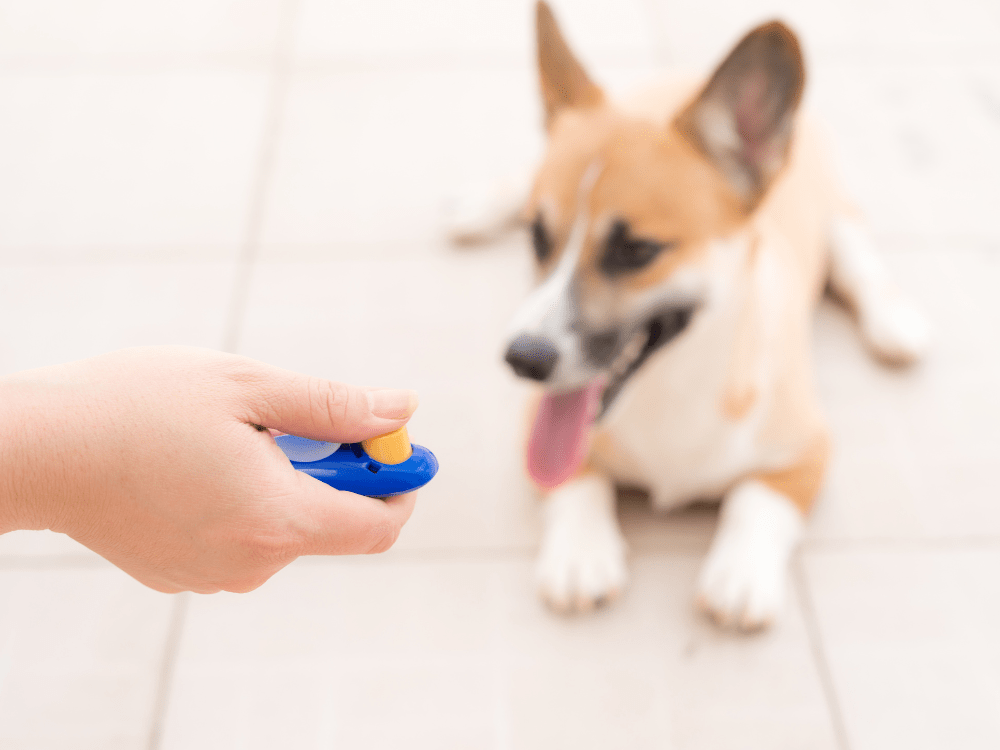
EXAMPLE: Plan to Use Clicker to Teach New Behaviors
Step 1: Acquire a clicker
Step 2: Load the clicker (Click & Feed at the Same Time for 5-7 Days)
Step 3: Choose a behavior you want to train your pet to do or reinforce
Step 4: Wait for your pet to exhibit the behavior you want, or lure, and then click the clicker the second you get your desired behavior.
Step 5: Follow up the click with a treat or reward so your pet learns the behavior is desirable
Step 6: Repeat the process consistently until your pet reliably associates the behavior with the click and reward
Step 7: Gradually phase out the treats so your pet learns the behavior without expecting a reward every time
Step 8: Use the clicker to reinforce other behaviors as needed and enjoy improved communication with your pet
EXAMPLE: Using the Clicker to Teach Sit
Today, we will teach our dog how to sit using a clicker.
Step 1: Hold a treat in your hand and let the dog smell it.
Step 2: Slowly move the treat over the dog’s head so that he follows it and sits down.
Step 3: When the dog sits, click the clicker and give him a treat/reward.
Step 4: Repeat this many times so that the dog understands that sitting down results in a treat.
Step 5: Once the dog starts sitting consistently, add a verbal cue like “sit” before giving the treat.
Remember, patience is crucial, and always be kind to dogs in the learning phase!
For those new to clicker training, it is important, to begin with one behavior at a time. Focusing on a single behavior will help you perfect your timing and precision with the clicker. Rather than overwhelming yourself with multiple behaviors, take the time to understand the principles of clicker training and how to use the tool properly. Once you have a firm grasp on one behavior, you can move on to additional behaviors with greater confidence and skill. Remember to be patient and consistent in your training, as it takes time for both you and your pet to learn and develop new behaviors.
Keep an eye out for this week’s infographics! We’ll be adding a visual aid!


 PRACTICANINES